
Use case
DNS for compliance and disaster recovery
Resilience rules such as the EU’s DORA (in force since January 2025) ask regulated companies to show that critical ICT services survive the failure of a third-party provider. DNS is one of them, and it is easy to forget.
The problem
- A DR plan that fails over compute and databases still depends on the DNS provider that points users at them.
- Auditors ask for evidence, not intentions: which providers serve the zone, whether they agree, and what happened during the last incident.
- Enterprise DNS vendors sell redundancy through their own secondary DNS, which ties both legs to one vendor’s contract.
How RedundantDNS handles it
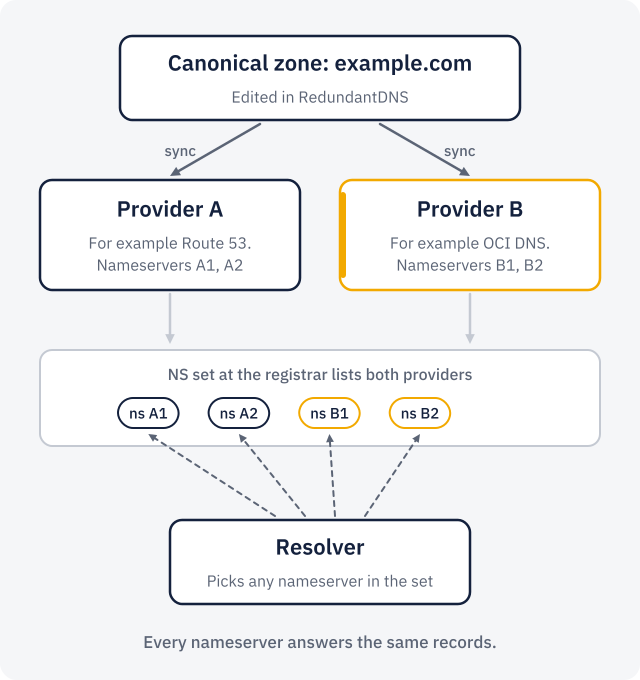
- The zone is served by two or more independent providers you pick (for example Azure DNS and OCI DNS), each one a full copy.
- Every change is verified by reading each provider back. Probes query every nameserver from each probe region and record reachability, latency, serial and whether the answer matches.
- Alerts cover drift, sync errors, broken delegation, providers down or degraded, and zones not verified for too long. Their history and the audit log are kept per organization.
- For the strictest cases, run the data plane yourself or self-host: provider credentials and encryption keys never leave your infrastructure.
The result
A DNS setup with no single provider in the critical path, and the records to show it: probe results, alert history and an audit trail of every change.
Plans that fit: Business or Enterprise. See pricing or how it works.
Other use cases
Put your zone on two providers
Start with one zone and two providers you already have. Free, no card.