
Use case
Self-hosted multi-provider DNS for enterprises
Some teams cannot hand DNS credentials to a SaaS, however well it encrypts them. RedundantDNS is a single Go binary backed only by object storage, so it can run inside your network.
The problem
- Security reviews stop at “a third party holds keys that can rewrite our DNS”.
- Enterprise DNS suites that solve redundancy also want to become your DNS provider.
- Running octoDNS in CI works, but it has no dashboard, no probes and no alerting for the people who are not on the platform team.
How RedundantDNS handles it
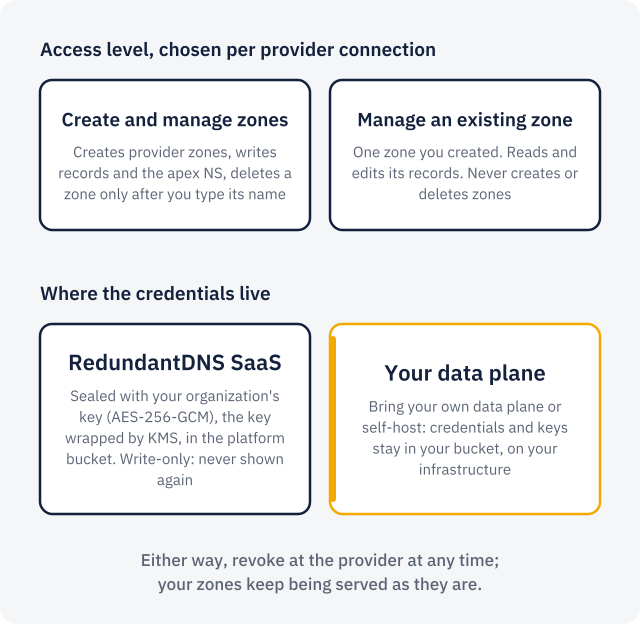
- Self-hosted: run the all-in-one binary with an S3-compatible bucket (or a local directory) and your own keys. No database to operate.
- Bring your own data plane: use our control plane, run the data plane on your infrastructure, and keep provider credentials and encryption keys in your bucket.
- Organization keys are wrapped by AWS KMS or OCI Vault; buckets can replicate to a second cloud with a documented failover switch.
- The same API, Terraform provider and MCP server work against your install.
The result
Multi-provider DNS with the operating model your security team already accepts: your network, your bucket, your keys.
Plans that fit: Enterprise. See pricing or how it works.
Other use cases
Put your zone on two providers
Start with one zone and two providers you already have. Free, no card.